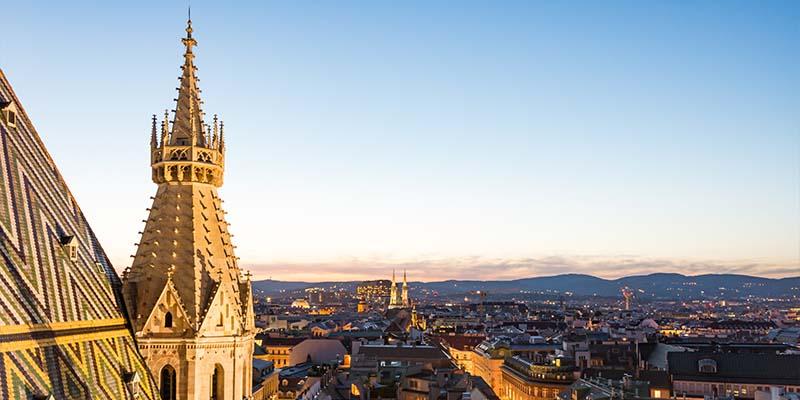
Vienna developed over centuries as the political and cultural center of the Habsburg Empire, and that legacy remains deeply embedded in the city’s structure. Unlike cities that preserve history in isolated districts, Vienna presents its imperial past as part of everyday life. Government buildings, residences, museums, and public spaces still follow the logic of empire, diplomacy, and administration, giving the city a sense of order and continuity that feels intentional rather than nostalgic.
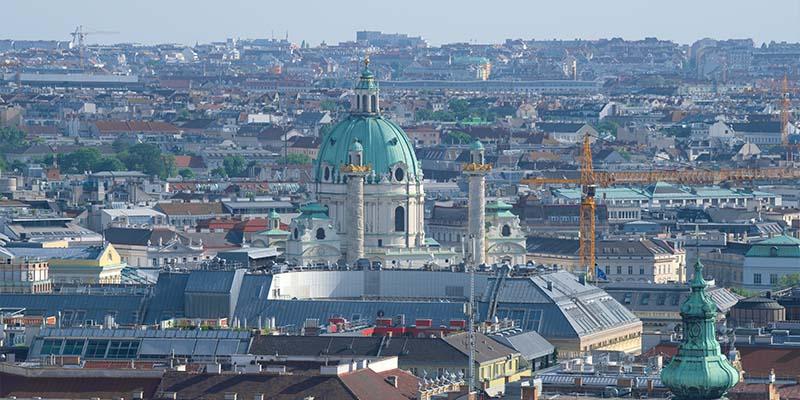
Traveling through Vienna often feels like moving through a carefully composed landscape. Broad avenues frame monumental buildings, gardens soften formal architecture, and cultural institutions occupy spaces originally designed to project authority and refinement. This continuity between past function and present use defines much of Vienna’s appeal.
Imperial Architecture and Palaces
Vienna palaces offer the most direct insight into the city’s imperial history. These buildings were not simply residences but working centers of power, ceremony, and governance. Their scale, layout, and decoration reflect the Habsburg view of authority as something to be seen, structured, and reinforced through space.
Schönbrunn Palace stands as the most widely recognized imperial residence. Originally built as a summer retreat, it evolved into a symbol of dynastic continuity. Walking through its state rooms reveals how court life was organized around hierarchy and display, while the extensive gardens extend this order into the landscape itself. The alignment of paths, fountains, and viewpoints reinforces the connection between architecture and control.
The Hofburg complex, located in the historic center, served as the administrative heart of the empire. Rather than a single structure, it developed as an interconnected group of buildings reflecting centuries of expansion. Today, its courtyards and wings house museums, offices, and ceremonial spaces, allowing visitors to experience how imperial governance shaped the city’s core.
Other palatial residences and noble townhouses appear throughout the Inner City, often repurposed but still visually dominant. Together, these structures establish Vienna’s architectural identity as one rooted in continuity rather than reinvention.
Museums and Cultural Institutions
Vienna attractions are closely tied to institutions established through imperial patronage. The city’s museums reflect centuries of collecting, scholarship, and state-supported culture, offering insight not only into art but into how knowledge itself was valued.
The Kunsthistorisches Museum exemplifies this tradition. Its collections were assembled to reflect the empire’s reach and intellectual ambition, spanning ancient civilizations, Renaissance masters, and decorative arts. The building’s architecture reinforces its purpose, with grand staircases and symmetrical galleries emphasizing order and authority.
The Albertina adds a different perspective, focusing on graphic arts, prints, and modern works. Housed in a former Habsburg residence, it demonstrates how imperial spaces have adapted to contemporary cultural life without losing their historical presence.
Music institutions play an equally central role. Vienna’s association with classical music is not abstract but institutional, supported by opera houses, concert halls, and conservatories that continue to shape the city’s cultural rhythm. Performances here feel less like reenactments of the past and more like ongoing traditions.
Historic Streets and Urban Spaces
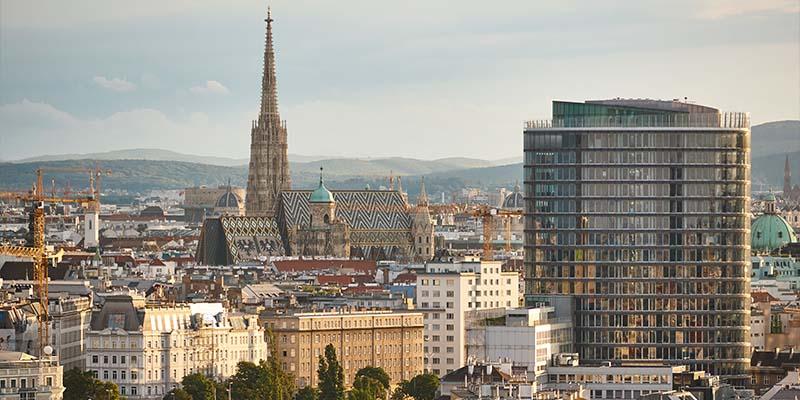
Vienna’s urban layout reflects imperial planning principles designed to project stability and control. The Ringstrasse, built in the nineteenth century, replaced medieval fortifications with a monumental boulevard encircling the historic center. Along it stand government buildings, theaters, museums, and residences, forming a curated display of imperial confidence.
Walking along the Ringstrasse reveals how architecture was used to express political ideals. Each building carries symbolic weight, from parliament and city hall to cultural institutions. The scale encourages slow movement and observation rather than urgency.
Beyond the main boulevards, narrower streets in the Inner City reveal earlier layers of Vienna’s development. These lanes connect courtyards, churches, and small squares, offering contrast to the formal grandeur of imperial avenues. Cafés, bookshops, and residential buildings maintain a sense of daily life within these historic spaces.
Public squares function as social anchors, reinforcing Vienna’s tradition of civic engagement. These spaces feel composed but accessible, designed to support interaction without spectacle.
Vienna Imperial History in Everyday Life
Vienna imperial history is not confined to museums or palaces. It appears in street names, institutional practices, and cultural habits that persist quietly. Bureaucratic order, punctual public transport, and attention to protocol all echo systems developed during the imperial period.
This continuity contributes to Vienna’s atmosphere. The city feels governed rather than improvised, shaped by long-term planning rather than rapid adaptation. For visitors, this creates a sense of clarity and predictability that contrasts with more chaotic urban environments.
Even modern developments often align with historic principles, reinforcing coherence rather than disruption. New architecture tends to respect existing scale and sightlines, preserving the visual language established centuries earlier.
Cuisine and Café Culture
Viennese cuisine developed within the context of empire, drawing influences from across Central and Eastern Europe. Dishes reflect regional diversity unified through court kitchens and urban dining culture. This culinary history remains visible today in traditional restaurants and cafés.
Coffeehouses occupy a special place in Vienna’s social fabric. More than places to drink coffee, they function as extensions of public space, supporting conversation, reading, and observation. Historically, these cafés served writers, intellectuals, and officials, providing neutral ground for exchange.
Pastries and classic dishes continue to anchor the city’s food culture. Eating in Vienna often feels ritualized, tied to time and place rather than speed or novelty. This reinforces the city’s broader emphasis on structure and continuity.
Cultural Rhythm and Daily Pace
Vienna’s pace reflects its institutional character. Days unfold methodically, shaped by opening hours, concert schedules, and social routines. Even leisure feels organized, framed by tradition rather than spontaneity.
This rhythm appeals to travelers who appreciate clarity and intention. Time spent in Vienna often involves planned visits balanced with moments of stillness, such as sitting in a café or walking through a formal garden. The city rewards patience and attention rather than constant movement.
Seasonal changes affect atmosphere without altering structure. Winter emphasizes interiors, concerts, and museums, while warmer months draw activity into parks and courtyards. In each season, the city retains its composed character.
Vienna as a Cultural Reference Point
Within Austria travel, Vienna functions as both a destination and a reference point. Its institutions influence national identity, while its preservation standards set expectations for cultural heritage. Visitors often find that understanding Vienna helps contextualize other regions, revealing contrasts between imperial center and provincial traditions.
The city’s role as a diplomatic and cultural hub continues today, maintaining relevance beyond tourism. Conferences, international organizations, and cultural exchanges reinforce Vienna’s position as a city shaped by governance and dialogue.
Conclusion
Vienna presents a city defined by structure, continuity, and cultural confidence. Its imperial sights and attractions do not exist as isolated landmarks but as components of a coherent urban system shaped by centuries of governance, patronage, and planning. From palaces and museums to streets, cafés, and public spaces, history remains embedded in daily life rather than preserved at a distance.
For travelers seeking insight into how power, culture, and tradition shape a city over time, Vienna offers a clear and enduring example. It is a destination that invites observation, understanding, and appreciation of continuity rather than spectacle.