Most people stumble into Asilah because they need a break from Tangier. After a few days of dodging motorbikes and hustlers in the big city to the north, the silence of this coastal town feels strange. This isn't Chefchaouen. While the internet loves to group them together as "Morocco's blue cities," Asilah is different. It is flatter, brighter, and dominated by the sound of the ocean crashing against the Portuguese ramparts. It feels more like a southern Spanish village that got lost across the strait.
The town works on a slow clock. If you arrive expecting a checklist of ten museums and grand palaces, you will be done by lunch. The point here is to slow down, eat seafood that was swimming an hour ago, and deal with the humidity.
The Train Station Is Not in the City
The rail connection from Tangier is excellent. It’s cheap, fast, and comfortable. But there is a logistical quirk that catches travelers off guard. Asilah’s train station sits in the middle of nowhere. It is about two kilometers north of the town center, surrounded by fields and scrubland.
When you step off the train, you cannot walk to your hotel. The road is long, exposed to the sun, and confusing. You have to rely on the taxis waiting outside.
Here is the friction point. The drivers know you have no other option. A ride to the medina gates—usually Bab Al Kasbah—should cost a standard, modest fare. However, tourists often get quoted triple the local price. Agree on the fare before you put your bag in the trunk. If the price sounds ridiculous, walk away towards the main road; the price usually drops immediately.
For those driving, the rule is simple: do not drive into the medina. The streets are too narrow, and it is a pedestrian zone. There is a guarded parking lot near Bab Homar. Park there, tip the guardian, and carry your bags inside.
The Walls Change Every Summer
Asilah is famous for its street art, but this isn't random graffiti. It is an organized cycle connected to the Cultural Moussem of Asilah. This annual festival, usually held in mid-summer, invites artists to paint the white walls of the old town.
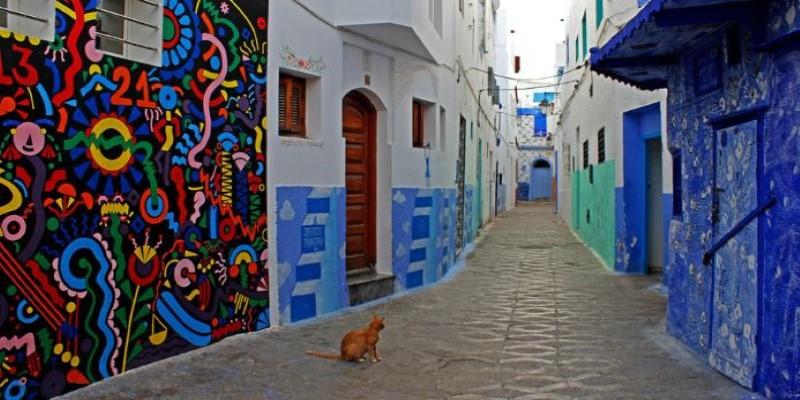
This means the town looks different depending on when you book your trip. If you visit in May, you are seeing art that has weathered a full winter of salt spray and sun. It might be peeling. It looks gritty and textured. If you visit in August, the paint is wet, vibrant, and sharp.
You may turn up right as the town is being freshly whitewashed for the upcoming festival. The walls turn bright, almost harsh in the sun. It has its own stripped-back charm, but if you came hoping for bold street art, the timing can feel off. The festival itself changes the whole pace of the place. For a few summer weeks, the quiet streets fill up, and finding a room becomes nearly impossible unless you planned well ahead. If you want to see the murals without the crowds, go in September. The paint is still crisp, but the holiday rush has lifted.
The Horse Cart to Paradise Beach
The city beach works for a quick swim, but it fills fast with teenagers kicking a football around. If you want the postcard version of the Atlantic coast, you need to head south to Paradise Beach (Kaf Lahmam). It’s too far to reach on foot. A taxi will get you there, but the classic way is the kouti—the horse cart. You’ll see them lined up by the port entrance.
Don’t expect comfort. This isn’t a polished carriage ride but a slow, rattling haul along a dirt track that cuts through farmland. Some carts are draped in bright cloth, but none have real suspension. You will feel every stone on the route. The ride takes about forty-five minutes each way.
You have to agree on the price before you leave. The driver can return at a set time or wait somewhere shaded if you’re only staying long enough for a swim. Paradise Beach itself is open, windy, and mostly untouched. Facilities are minimal. In summer, a few temporary shacks appear selling grilled sardines and glasses of mint tea. Outside the warm months, the beach is empty except for the surf and the gusts that whip across the sand. Bring your own water and anything else you might need.
If you want something lively, stay in town. But if you want space, rough edges, and a stretch of coast that still feels far removed from the city, the koutchi ride to Paradise Beach is the one trip that delivers exactly that.
Damp Sheets and Oyster Carts
Asilah sits right on the water. The sea wall is the only thing separating the medina from the waves. This geography creates a specific climate issue: humidity.
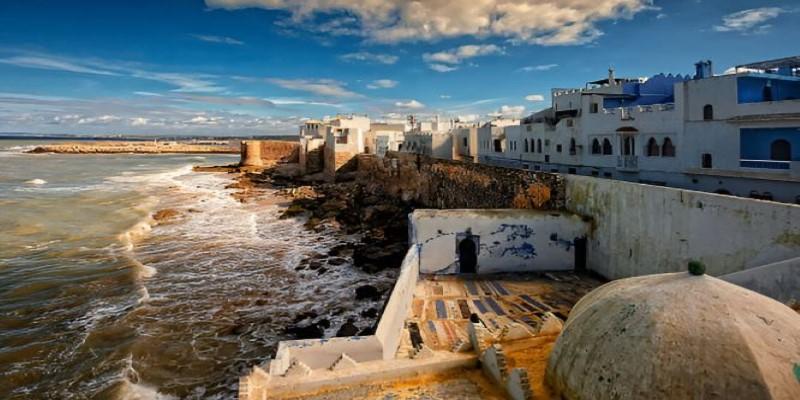
In the winter, the stone houses of the medina get cold and damp. Most traditional riads do not have central heating. They rely on portable electric heaters and thick blankets. When you get into bed in January, the sheets can feel clammy. It’s a bone-deep chill that surprises visitors who think Morocco is always hot.
If you have asthma or sensitivity to mold, be careful when booking ground-floor rooms in older buildings. Upper floors with cross-ventilation are always a safer bet.
The upside of the ocean location is the food. You will see carts on the street selling raw oysters. They are incredibly cheap and fresh, usually harvested from the nearby lagoons. The seller will shuck them right there, squeeze a lemon over them, and hand them to you. It’s the ultimate fast food.
Nightlife is virtually non-existent. People eat late, but the streets empty out by midnight. There are no clubs. The evening entertainment consists of walking to the "Krikia" (the viewpoint on the ramparts) to watch the sunset, and then finding a small restaurant for a tagine.
Conclusion
Asilah serves a distinct purpose. It cleans your palate. It doesn't have the intensity of Fez or the glamour of Marrakech. It is a working town with a coat of white paint and a lot of fishing boats. You come here to ride a bumpy horse cart to a hidden beach, argue gently with a taxi driver, and sleep under a heavy wool blanket while the ocean roars outside your window.